How Can Security Companies Use GetHomeSafe to Protect Their Officers?

Quick answer: Security companies use GetHomeSafe to keep lone officers safe across every shift, scheduling automatic check-ins, escalating the moment one is missed, and giving officers instant duress, panic and man-down alerting when a situation turns dangerous. It gives control rooms and supervisors real-time visibility of who is on site, who is overdue, and who needs help right now, without relying on officers to remember to phone in.
This Friday, 24 July, is International Security Officers' Day. The date was chosen to reflect the 24/7 nature of the job, the officers patrolling empty buildings at 3am, standing at the gate through a public holiday, and quietly stopping incidents before anyone else even notices there was a risk.
It's the perfect moment to talk about something that too often gets overlooked: who is keeping the security officer safe?
Because the reality is that security work is one of the most exposed forms of lone working there is. Officers routinely work alone, at night, in unfamiliar or high-risk environments, and they're frequently the person expected to walk towards trouble rather than away from it. That's exactly the kind of work GetHomeSafe was built to protect, and it's why a growing number of security companies rely on it every single shift.
Why do security officers need lone worker protection?
Security officers need lone worker protection because they combine almost every recognised lone-working risk in a single role: isolation, unpredictable confrontation, night shifts, and constant movement between sites where help isn't close by.
A typical shift might involve patrolling a deserted industrial estate, monitoring an empty office tower, guarding a construction site, working a mobile patrol between locations, or de-escalating an aggressive situation at an event, often with no colleague in sight and no one actively watching to confirm they're okay.
The hazards stack up quickly:
- Violence and confrontation — officers are far more likely than most workers to face aggression, intimidation or physical assault.
- Working alone and after hours — if something goes wrong on a night shift, there may be no one around to notice for hours.
- Medical emergencies — a fall, a collapse or a sudden health event with no one nearby can turn serious fast.
- Mobile and multi-site patrols — officers move constantly, so knowing where someone is at any moment is a genuine challenge.
- Poor or no coverage — patrols through basements, remote yards or rural sites can drop officers out of contact entirely.
For the security companies that employ them, this isn't just a duty-of-care concern, it's a legal obligation under workplace health and safety law in both Australia (WHS Act) and New Zealand (HSWA). Being able to demonstrate a live, auditable safety system for lone officers is increasingly expected in contracts and tenders, too.
How do security companies actually use GetHomeSafe?
Security companies use GetHomeSafe to turn "we hope our officers are okay" into "we know exactly who's safe, who's overdue, and who needs help." It works across the whole shift, not just in an emergency.
Here's what that looks like in practice:
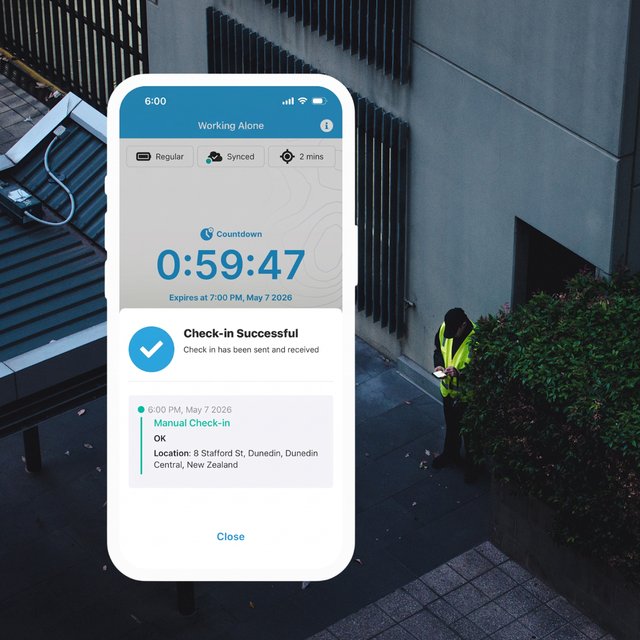
Automated check-ins across every shift. Officers confirm they're safe at set intervals throughout their shift. If a check-in is missed, GetHomeSafe reminds the officer first, then automatically escalates to supervisors or a monitoring centre if there's still no response, so a silent officer never goes unnoticed.
Instant duress and panic alerts. When an officer is confronted or threatened, a single button immediately notifies their supervisors or control room with the officer's live location.
Man-down detection. If an officer collapses, falls or stops moving, GetHomeSafe can automatically detect the lack of movement and raise an alert, critical for medical events or assaults where the officer can't reach for their phone.
Live GPS tracking for mobile patrols. Supervisors can see where officers are in real time, making mobile and multi-site patrols far easier to manage and account for.
Site check-in and check-out. Officers log when they arrive and leave a site, giving a clear, timestamped record of patrols and coverage across a contract.
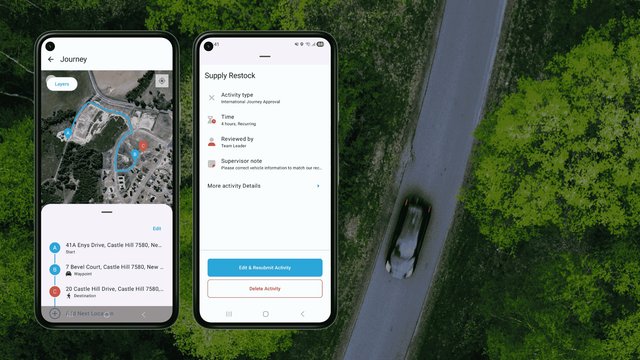
Journey and task planning. For officers travelling between sites or heading to remote locations, journey plans and pre-start checks help manage the travel risks that compound with working alone.
Risk assessments and pre-start checks. Officers complete configurable risk assessments and pre-start checks before a shift or task, capturing important information and triggering the right risk-management controls up front, so hazards are flagged and dealt with before an officer is exposed to them, not after.
Fatigue management. Long shifts, night work and back-to-back rosters make fatigue one of the biggest hidden risks in security work. GetHomeSafe helps you keep sight of it, using check-ins, shift timing and pre-start prompts to flag when an officer may be over-extended, so supervisors can step in before tiredness turns into a safety incident.
Real-time visibility for the control room. Everything feeds into one central platform, so whoever is monitoring can see the whole team's status at a glance, and follow your own escalation procedures step by step when something is triggered.
See how GetHomeSafe's lone worker safety features work in practice →
Learn more
What if an officer works somewhere with no phone signal?
If an officer loses coverage, a basement car park, a rural site, a shielded building, GetHomeSafe still keeps working, because it's built around time and movement rather than relying on a constant connection.
The system watches for missed check-ins and overdue activities regardless of signal, and compatible GPS satellite devices can be paired to an officer's account so they can still update their location and call for help when they're out of mobile range. For security companies covering remote or hard-to-reach sites, that closes one of the most dangerous gaps in lone worker safety.
Can security companies choose how officers are monitored?
Yes, security companies can either self-monitor their officers in-house or use professional monitoring, and even mix the two.
Many security firms already run a control room, so they use GetHomeSafe's centralised monitoring to manage officer safety alongside their existing operations, building their own follow-up procedures directly into the platform. Others prefer 24/7 professional monitoring of critical alerts, such as duress and man-down, so there's always a trained response, even overnight. GetHomeSafe supports both, which means the safety setup can flex to fit how each company actually operates.
Every security operation runs a little differently. Book a demo and we'll walk you through how GetHomeSafe could fit yours.
Book a demoWhy does this matter on International Security Officers' Day?
International Security Officers' Day exists to recognise the people who spend their working lives protecting everyone else, and the most meaningful way to honour that is to make sure they're properly protected in return.
Officers show up 24/7 so the rest of us don't have to think about the risks. Giving them a fast, reliable way to call for help, and a system that raises the alarm even when they can't, is one of the most practical forms of appreciation a security company can offer. This Friday is a good reminder that recognising the profession and resourcing its safety go hand in hand.
To every security officer out there: thank you. #thankyousecurityofficers
Frequently asked questions
International Security Officers' Day is a global initiative held every year on 24 July to recognise and celebrate the work of security officers. The date reflects the 24/7 nature of the profession, and it's now marked in countries including Australia, New Zealand, the UK, the USA, Canada and many others.
Yes. Security guarding involves lone work, night shifts, confrontation risk and constant movement between sites, exactly the scenarios GetHomeSafe is designed for, with check-ins, duress alerts, man-down detection, risk assessments and live GPS tracking all in one solution.
No. GetHomeSafe runs on an officer's standard smartphone. Optional extras like Bluetooth wearable panic buttons and satellite GPS devices are available for higher-risk or out-of-coverage work, but they aren't required to get started.
Yes. It gives security companies an auditable, real-time record of check-ins, alerts and officer locations, helping demonstrate their duty of care under Work Health and Safety obligations.
You can create a free GetHomeSafe account and start a free trial in about a minute with no credit card required, then configure check-in schedules, escalation procedures and monitoring to suit how your team operates. For larger teams or a more complex solution, we highly recommend booking an obligation-free demo to gain a comprehensive understanding of exactly how GetHomeSafe could look for your team.
Want to protect your officers the way they protect everyone else?
See how GetHomeSafe works for your security team, start a free trial or book an obligation-free demo to get a comprehensive understanding of how it could look for your officers.
Updated: July 24th 2026