A former nurse on lone worker safety in healthcare - Q&A with Cat
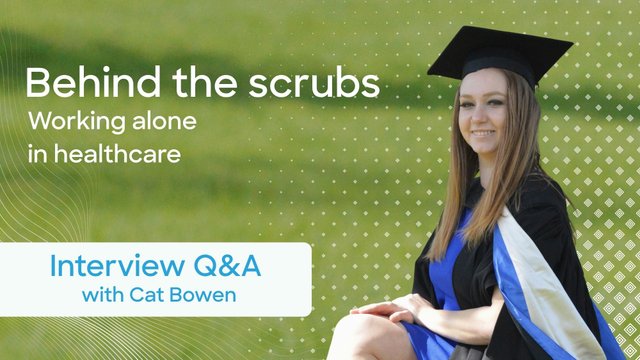
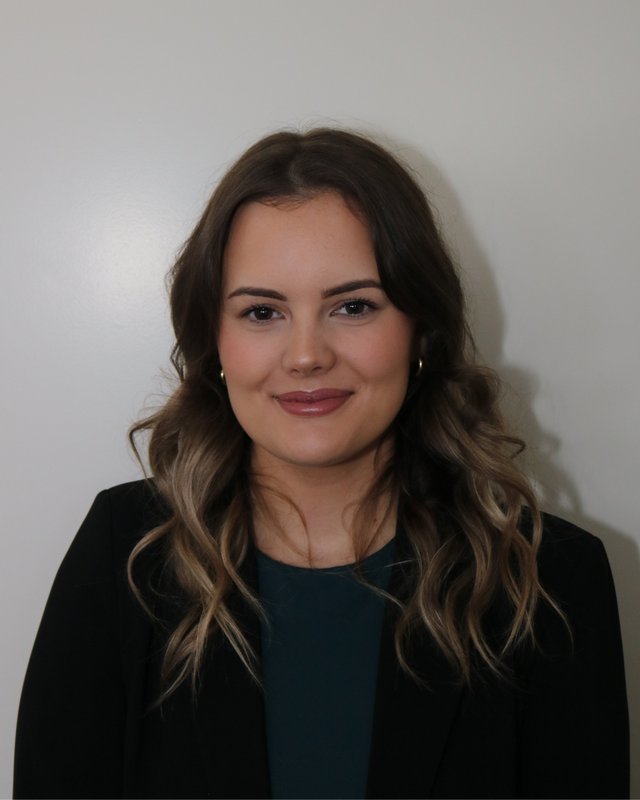
October is a month of healthcare awareness days, so it felt like the right time to hear from someone who has seen lone worker safety from both sides.
Cat is an Account Executive here at GetHomeSafe. Before joining the sales world, she was a registered nurse, graduating in the middle of COVID and working in Community Mental Health Outreach. She knows what it's like to walk into a client's home with nothing but a work phone and a whiteboard back at base.
We sat down with Cat to talk about what working alone in healthcare really looks like, the moments that stuck with her, and what she now tells Health & Safety Managers about protecting their teams.
Meet Cat
For anyone who hasn't met you yet, what's your role at GetHomeSafe, and what's your background before joining us?
I'm part of the Sales Team at GetHomeSafe as an Account Executive, working with organisations to understand how they currently manage lone and remote worker safety and where we can help. Before I started my career in sales, I trained as a Registered Nurse, working across Mental Health & Addictions and Forensic Mental Health while getting my Postgraduate Diploma.
You trained and worked as a registered nurse, a COVID graduate, no less. What was that like, starting your nursing career in the middle of a pandemic?
I started my final semester of my BHSc(Nurs) in March 2020, pretty much when COVID arrived and the world changed. I finished my degree in July that year, sitting the State Exam less than a week after finishing my final placement, after students had been unable to be in hospitals during the peak of lockdown.
There was a lot of pressure to finish and get out into the field. Healthcare workers were needed more than ever, and I remember feeling really grateful that I was going into a career where I could contribute during such a difficult time. At the same time, it was a stressful way to begin. I was dealing with all the normal nerves of finishing my degree, sitting the biggest exam of my life and becoming a Registered Nurse, while also navigating lockdowns, changing restrictions and a healthcare system under enormous pressure.
There were some pretty special moments, though. My regalia arrived just before Auckland went into lockdown again in August 2020, so instead of walking across the stage, my sister took a graduation photoshoot in a park near home. People came out of their houses to cheer me on, socially distanced, of course! Another moment I'll never forget was my dad sliding my degree under my bedroom door because I'd been working that day and was mentally exhausted from everything that had gone into getting there.
Looking back, it was a pretty unique introduction to nursing. I was training alongside a team who understood the stress the world was under, while also doing everything we could to look out for one another and keep each other safe. It made me appreciate very early on just how important good communication, strong support systems and having people looking out for you really are.
Working alone, without a safety net
Thinking back to your time as a nurse, were there situations where you were working alone or in a vulnerable position: home visits, night shifts, isolated wards?
Absolutely. While working in the Community Mental Health Team, I would be entering into someone else's environment, often not knowing exactly what I was walking into. You're away from the controlled environment of a hospital, and things can be unpredictable. In mental health especially, our clients were vulnerable and at times could be unwell or not fully aware of their environment, their actions, or the impact those actions could have on the people trying to help them.
I'd be entering clients' homes or properties, or taking clients to appointments in my work car, with no real monitoring in place day to day. Anything could have happened at any point, whether that was a risky situation with a client, something within the environment I was entering, or even something happening on the road, like a car crash.
Even on the inpatient unit, there were times you could feel quite isolated. You weren't technically alone, but short staffing, long hours (with shifts turning into doubles more often than not), team exhaustion and high caseloads meant everyone was stretched looking after their own clients. If a situation changed quickly, another staff member might not be immediately available or even know what was happening. We would also regularly leave the unit to assist clients with medical appointments elsewhere in the hospital, escort them into the community, or make sure they were safely discharged to respite care or their home address. There weren't systems in place to monitor us while we were doing that, and taking a staff member away from the unit meant fewer people were left behind to support the rest of the team.
Looking back now, I realise that being a "lone worker" or being in a vulnerable position doesn't always mean physically working alone. You can be surrounded by other people and still find yourself in a situation where immediate help isn't available.
Did your workplace have any kind of formal lone worker safety process at the time? What did "checking in" actually look like, if anything?
In the Community Mental Health Team, what we had in place was pretty basic. There was plenty of PPE in the work car, a whiteboard where we would write down who we were visiting (if I remembered to write everyone, and wasn't called somewhere unplanned!) and the work phone in my pocket. If something went wrong, I'd be relying on that phone to call my manager or another clinician and hoping like crazy that someone answered.
We also weren't consistently capturing or tracking the level of risk for each visit. As clinicians we were constantly assessing risk, but there wasn't a process where I could record, "I'm going into this environment, these are the risks I've identified, and this is my level of concern," and have that tied to me being out there. If circumstances changed once I arrived, there wasn't a simple way to update that risk and make someone else aware of it in real time.
Those same work phones were also being used for client communications, and other clinicians were often on the road themselves while my manager could be tied up in meetings. In a potentially escalating situation, getting my phone out to call for help also meant making it obvious to the person I was with. Not only could that escalate things further, but my attention would be on my phone rather than on the situation in front of me.
On the inpatient unit there was an assumption that other people were around if something went wrong. But if everyone was busy with their own clients, or staff had left the unit to escort someone elsewhere, there wasn't necessarily someone watching or immediately available. A lot of the time, your safety depended on another person being nearby, noticing what was happening and being in a position to respond.
I also can't say I remember consistent check-ins if I was late back from a community visit or wasn't where I'd said I would be. Everyone was so busy and engrossed in their own roles that we couldn't rely on someone remembering to check up on us. There were processes of sorts, but so much of them relied on people: us remembering to tell someone where we were going, someone else remembering we were out, and someone being available to notice and respond if something went wrong.
When something went wrong
Was there ever a moment where you felt unsafe, or knew of a colleague who did, and there wasn't a clear system in place to help?
There were definitely times I felt unsafe, particularly during community visits. You're entering someone else's home and you never completely know what you're walking into. There could be weapons around, drugs or drug use, dogs on the property, other people you weren't expecting, or simply a client whose mental state had changed significantly since you last saw them. As a clinician you're constantly assessing the situation, knowing where you are, where your exit is, and whether something is starting to change. Ultimately you're still in someone else's environment, and often on your own.
I remember one community visit where I was bitten by a dog at the property. I ended up needing to have the bite looked at and get a tetanus shot, but in terms of letting anyone know what had happened, all I could really do was text my manager. There wasn't a system monitoring me or a way for someone to automatically know that something had happened while I was out there. And that was a dog bite. It makes you think about what would have happened if it had been something more serious and I wasn't able to send that message myself.
Another incident that has always stuck with me happened on the inpatient unit. An unwell client came up behind me and went to punch me in the head, and I was incredibly lucky that another nurse happened to be close enough to see what was happening. They grabbed me and pulled me out of the way before the punch landed. It happened so quickly that I didn't have an opportunity to react myself, let alone get a phone out and call somebody for help.
I consider myself one of the lucky ones because someone happened to be there, noticed what was happening and reacted quickly enough. But I think about what could have happened if they hadn't been standing there, or if the punch had landed and I wasn't able to call for help myself. At the time, situations like these could almost feel like part of the job. Now, being on the other side of worker safety, I look at them quite differently.
The moment it clicked
When you first learned about what GetHomeSafe actually does, was there a moment it "clicked" against your own experience as a nurse?
When I first understood how GetHomeSafe worked, I immediately started thinking back to how we managed safety when I was nursing. The whiteboard, the work phone, hoping someone answered. Suddenly I could see the gaps in processes I'd never really questioned at the time. It made me realise how dangerous my time as a nurse without a system in place was, and that there are systems out there designed to bridge exactly that gap.
The overdue side particularly clicked for me. As a nurse, I was responsible for telling someone if something went wrong. But what if I couldn't? Having a process that can recognise that someone hasn't returned or checked in changes that.
Another that hit home was knowing GetHomeSafe has processes for discretion, so you can call for help without inflaming the situation or pulling out your phone, such as pressing a wearable button worn like a watch so you get the help you need without drawing attention.
It also changed how I thought about monitoring. It isn't about someone watching where you are all day; it's about making sure someone knows when you might need help.
What's it like now, selling a safety solution to healthcare and community organisations, knowing firsthand what it's like to be the worker on the other end of it?
Healthcare is probably the sector I relate to most personally. When someone tells me their staff are visiting clients alone, driving between appointments or working in unpredictable environments, I can picture exactly what that feels like, and how isolating it is. I relate to other sectors that aren't entirely healthcare, but perform home visits and spend time in the community, too.
I also understand why adoption matters. When you're a nurse with a huge caseload, the last thing you want is another complicated process. Whatever is put in place has to work around the job rather than make the job harder. That's why I think GetHomeSafe is so excellent: it's designed to be easy for team members to use, and it makes check-ins, and someone knowing where you are when you really need help, quick and simple.
There's something quite rewarding about now helping organisations think about the risks I used to experience myself.

What Cat tells Health & Safety Managers
From conversations with healthcare and community customers, what's the biggest safety gap you see in how lone and remote workers are managed before implementing GetHomeSafe?
The biggest gap I see is reliance on manual processes. A whiteboard, spreadsheet, calendar, text message or simply telling someone where you're going can feel like a process, but it still depends on people remembering.
I experienced that myself. Everyone was busy doing their own jobs, so even with the best intentions, you couldn't guarantee someone would notice quickly if you didn't come back. Even if I did call for help, I couldn't guarantee whoever I called would be available, and I knew it could inflame the situation and put me at more risk.
For me, the important question is: what happens when the worker can't tell you they need help? And what do you have in place to know where they are when they do somehow manage to call?
If a manager is unsure whether their team really needs a lone worker solution, what would you say to them, drawing on your own experience as a former nurse?
I'd ask them to walk through a real scenario. One of your team goes into a client's home and something happens. They can't call you. How do you know? How long before somebody notices? Who responds? Is there ever a time you can't be available for your team's phone calls for assistance, and what do you do when that happens?
I'd also encourage them to talk to their workers. Managers may believe a process is working, while the person actually doing the job may be relying on their phone, their own judgement or simply hoping somebody knows where they are.
You don't need to wait for a serious incident to find the gaps in a process.
What does "good" lone worker safety actually look like in a healthcare setting, in your view?
For me, it needs to be simple for the worker, clear for the responder and appropriate for the level of risk.
Healthcare workers already have enough to think about. Safety shouldn't require them to constantly remember another complicated process. It shouldn't put them in the way of further harm, or be tricky to access and signal for help. They should know their team leaders have their back any time they're doing their roles, so if something does happen, someone is aware and doing what they can to get assistance to them quickly.
It should also recognise that risk changes. The environment you expected to walk into might not be the environment you actually find. Workers need a practical way to assess that and respond when circumstances change. And if something does happen, everyone should know what happens next, rather than trying to work it out in the moment.
The last word
Is there anything you wish more healthcare organisations understood about lone worker risk?
Healthcare organisations can hear "lone worker" and picture someone completely alone in a remote location. But you can be in the middle of a hospital and still be vulnerable if your colleagues are stretched and nobody is immediately available to help. Equally, a community nurse could be five minutes from the office but alone inside somebody's home.
You might have assessed a visit beforehand and have no major concerns, but then arrive to find an unexpected person there, a dog, drugs, weapons, or a client whose presentation has changed. The risk you planned for isn't necessarily the risk you end up facing. Even on the road you face risk, from other members of the community to accidents. There is always going to be risk, and it changes rapidly.
A whiteboard, work phone or telling someone where you're going is better than nothing, but ask what happens if the worker physically can't call for help or nobody notices they're overdue.
I also think there's a strong cultural point: healthcare workers can become accustomed to risk. When you're focused on caring for vulnerable people, things like aggression, unpredictable environments, long hours and working alone can start to feel like "just part of the job". Organisations shouldn't assume that because workers accept or manage those situations every day, the risk isn't significant. I wish more organisations looked at lone worker safety through the eyes of the person actually doing the job, rather than just asking whether there's a policy or process in place.
Anything else you'd want to add, from either side of the fence, as a former nurse, or as someone who now helps protect workers like your past self?
Your safety as a clinician matters too. Healthcare workers spend so much of their time thinking about the wellbeing and safety of their patients that their own safety can almost become secondary. I definitely accepted some things as simply being "part of the job" when I was nursing, and looking back now, I see some of those situations very differently.
You shouldn't have to choose between caring for someone else and protecting yourself. You deserve to know someone has your back while you're doing your job.
Want to see how GetHomeSafe supports healthcare and community teams? Explore our healthcare and community solutions, get in touch or book a demo to find out how it could work for your team.