What is journey management (and why it matters)
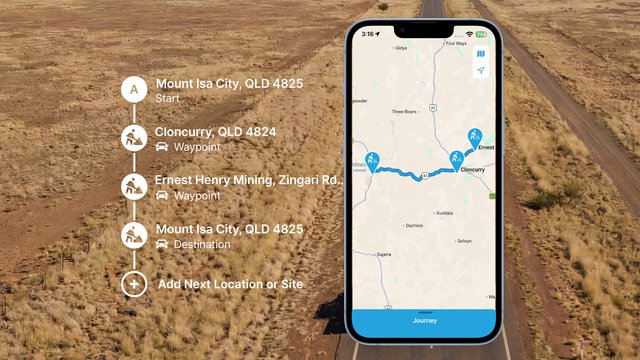

A field technician finishes a 10-hour shift and faces a two-hour drive home on rural roads. Should the organisation have a view on whether that journey happens, or how long it takes?
A sales rep drives 400km across three client meetings in a single day. Who’s responsible if fatigue becomes a factor?
A maintenance worker heads to a remote site alone, out of mobile coverage for six hours. Does anyone know when to start looking if they don’t come back?
Work travel is one of the most common safety risks organisations deal with, and it’s often one of the most overlooked. Many businesses have strong safety processes once people arrive on site. But there’s often far less structure around what happens between sites, on the road, or when someone is travelling alone.
That’s where journey management comes in.
What is journey management?
Journey management is a structured way of planning and managing work-related travel so risks like fatigue, remote conditions, weather, vehicle issues, and missed communication are controlled before and during a journey.
It applies anywhere workers are travelling for work, whether that’s driving between jobs, visiting clients, heading to remote locations, or working alone in the field.
At its core, it’s about one thing: making sure people get where they need to go, and get home safely.
Other terms you might recognise
‘Journey management’ is a frequently used term in Australasian mining, oil & gas, utilities, and government safety circles. You might also know this area as: Travel Risk Management (TRM), Driving for Work, Fatigue Management, Operational Travel Safety, Field Travel Safety, or Safe Travel Procedures.
Who needs journey management?
Journey management is relevant for any organisation where workers:
- Drive between sites or to client locations
- Travel regionally or to remote areas
- Work alone or move in and out of mobile coverage
- Operate in high-fatigue environments
- Travel after extended shifts
- Face variable weather or road conditions
It’s not just mining or heavy industry. Utilities, construction, healthcare, local councils, field service teams, and consultancies all deal with these risks. If travel is part of the job, journey management matters.
The question isn’t whether journey management applies to you. It’s what level of journey management matches your level of risk.
Why journey management is important
Travel is one of the highest-risk parts of work
For many roles, the most dangerous part of the job isn’t the worksite, it’s the drive between locations.
Fatigue, weather, vehicle issues, remote travel conditions, and loss of communication are all predictable risks. Yet they often receive less systematic attention than on-site hazards.
Safe Work Australia recognises fatigue as a workplace hazard that needs to be managed properly, like any other safety risk. But journey management also addresses risks beyond fatigue: vehicle failure in remote areas, medical emergencies away from help, communication gaps that delay response, and weather that turns a routine trip dangerous.
Model Code of Practice: Managing the risk of fatigue at work
safeworkaustralia.gov.au
Offsite doesn’t mean out of scope
A common assumption is that once someone leaves the workplace, travel becomes their own responsibility.
But regulators and courts increasingly look at whether travel risks were foreseeable and whether reasonable steps were taken to manage them.
Australian case example
In Matinca v Coalroc (No 5) [2022], the Court accepted work-induced fatigue as a contributing factor in a serious crash. The worker had completed a night shift before the long drive home.
The appeal decision later highlighted the complexities around enforcement, but reinforced that fatigue and travel are still relevant workplace considerations.
The simple takeaway: travel risk isn’t invisible just because it happens on the road.
Journey management prevents disruption too
Journey management isn’t only about avoiding worst-case incidents. It also helps prevent:
- Missed appointments due to breakdown or delays
- Unplanned overnight stays when journeys take longer than expected
- Confusion and wasted time when workers are overdue
- Delayed emergency response because no one knows where to look
- Repeated near misses that never get properly addressed
A good journey management process improves both safety and operational reliability.
What good journey management looks like
A practical journey management approach matches controls to the level of risk involved in each journey.
Journey planning and risk levels
Not all journeys carry the same risk. Many organisations use simple tiers to guide their approach:
Low risk
Short metropolitan travel during business hours, good mobile coverage, familiar routes
Controls might include: Basic vehicle checks, expected return time
Medium risk
Regional driving, some fatigue exposure, variable weather or road conditions
Controls might include: Journey plan with route and timing, scheduled check-in, fatigue breaks
High risk
Remote travel, poor or no coverage, significant fatigue exposure, solo travel in challenging conditions
Controls might include: Detailed journey plan, multiple check-ins, emergency contact protocols, alternative communication methods
Higher-risk journeys trigger stronger controls. A 20-minute suburban drive to a client meeting doesn’t need the same oversight as a six-hour journey to an isolated worksite.
Fatigue and fitness-to-drive controls
Good controls are clear enough that workers can apply them without constant supervision.
Examples include:
- Maximum driving time before a break (e.g., no more than two hours without a 15-minute rest)
- Daylight-only travel for remote or unfamiliar routes
- Minimum rest between shifts and long journeys (e.g., 10 hours off before a 3+ hour drive)
- Clear authority to delay travel if someone is too fatigued to drive safely
These aren’t abstract policies. They’re practical rules that give workers permission to make safe decisions, even when that creates scheduling pressure.
Communication and check-in expectations
Journey management works best when expectations are simple and consistent. Workers should know:
- When to notify someone they’re travelling
- What information to provide (route, destination, expected arrival)
- When and how to check in during or after the journey
- What happens if they can’t check in as planned
For a high-risk journey, this might mean: “Text your supervisor when you leave, check in when you arrive at the site, and text again when you’re heading home.”
For a medium-risk journey: “Log your trip in the system before you go, and let your team know you expect to be back by 4pm.”
The key is making it easy for workers to do the right thing and easy for supervisors to know when something’s wrong.
Overdue response and escalation
Every organisation should know what happens if someone doesn’t arrive or becomes uncontactable.
For example:
- 30 minutes overdue: Supervisor attempts contact via mobile
- 60 minutes overdue: Escalate to manager, check with known contacts, review journey plan
- 90 minutes overdue: Consider emergency services, notify family if appropriate
The response plan should include:
- Who responds at each stage
- What information is available (planned route, vehicle details, emergency contacts)
- How quickly action can be taken
- Who has authority to escalate to emergency services
This is where journey management moves from planning to protection. When things go wrong, having clear processes and accessible information makes the difference between a quick resolution and a delayed response.
Journey management in practice
Let’s look at how this works across different risk levels:
Low-risk example
A council worker drives 15 minutes across town to inspect a footpath. They note their departure and expected return in the shared calendar. No specific check-in is required, they’re expected back within the hour for their next meeting.
Medium-risk example
A field technician travels 90 minutes to a regional site, working there for four hours before returning. They log the journey plan with route and timing, text their supervisor on arrival, and again when leaving. If they’re 30 minutes overdue on return, the supervisor calls.
High-risk example
An engineer drives three hours to a remote mine site, including 40km of unsealed road with no mobile coverage. They submit a detailed journey plan the day before, check in by satellite phone on arrival, complete their work, and check in again before starting the return journey. If they miss the scheduled check-in by 45 minutes, escalation begins.
The controls scale with the risk. Higher risk journeys need more structure. Low- and medium-risk journeys need just enough visibility to notice if something’s wrong.
Legal and regulatory context
Journey management ties closely to workplace safety duties. While the specifics vary by jurisdiction, the principle is consistent: employers have responsibilities for foreseeable risks during work-related travel.
Australia: Safe Work Australia’s Model Code of Practice on fatigue management, NHVR work and rest requirements for heavy vehicles, and state-based WHS enforcement. WorkSafe Victoria recently prosecuted a company and director, resulting in $1.43 million in fines after a fatigued driver’s fatal crash.
New Zealand: Health and Safety at Work Act 2015 establishes duties to manage risks so far as is reasonably practicable. WorkSafe NZ provides specific guidance on driving for work and regularly prosecutes failures in this area.
Canada: Canada Labour Code Part II covers occupational health and safety. Criminal Code s.217.1 creates a legal duty for those who direct work to take reasonable steps to prevent bodily harm — the “Westray Law.” CCOHS provides detailed guidance on driving for work.
Further reading:
Safe Work Australia fatigue code: safeworkaustralia.gov.au
NZ driving for work guidance: healthandsafety.govt.nz
Canada Labour Code OHS: canada.ca
Making journey management practical
Journey management isn’t about paperwork. It’s about putting simple controls around one of the biggest everyday risks many organisations face.
The challenge is making it practical. Journey management can’t require 20 minutes of admin before every trip, or depend on workers remembering to text their supervisor, or leave managers manually tracking everyone’s movements across spreadsheets.
This is where purpose-built tools help. GetHomeSafe supports journey planning, worker monitoring, and escalation in one connected system. Workers can check in quickly, supervisors can see who’s overdue at a glance, and escalation happens automatically if someone doesn’t check in as planned.
Journey management becomes part of normal operations, not an extra burden.

Key takeaways
- Travel is often the highest-risk activity many workers do, yet receives less systematic safety attention than on-site work
- Employers may have duties that extend to foreseeable travel risks, including fatigue, isolation, and communication gaps
- Good journey management scales controls to match risk: not every trip needs the same level of oversight
- Practical systems include planning, risk assessment, clear check-in expectations, and escalation procedures
- The right tools make journey management simple to run day-to-day rather than creating administrative overhead
Journey management is relevant wherever people travel for work. The question is whether your current approach matches your level of risk, and whether your team can actually sustain it without the right systems in place.
Need Help to Operationalise Your Journey Management?
GetHomeSafe brings journey planning, check-ins, and escalation together in one system your team will actually use.
Journey management FAQs
Journey management is the process of planning and managing work travel so risks like fatigue, remote conditions, and missed communication are controlled. It usually includes trip planning, risk assessment, check-ins, and escalation steps if something goes wrong during a journey.
Journey management matters because driving and travel are among the highest-risk activities many workers do. Employers often still have a duty to manage foreseeable travel risks, especially when fatigue or isolation is involved. A good system reduces incidents and improves response when problems occur.
No. Journey management applies anywhere people travel for work, including utilities, construction, healthcare, councils, and service teams. Even short trips involve risks like fatigue, traffic, and communication gaps. The level of journey management should match the level of risk.
A journey management plan usually includes journey planning, risk assessment, fatigue controls, communication expectations, and overdue escalation procedures. The goal is to reduce risk before travel begins and ensure support is in place if something goes wrong.
GetHomeSafe helps organisations run journey management in a practical way. It makes it easy to plan journeys, manage worker check-ins, monitor overdue travel, and respond quickly if someone needs help. It turns journey management from a policy document into something teams actually use day-to-day.