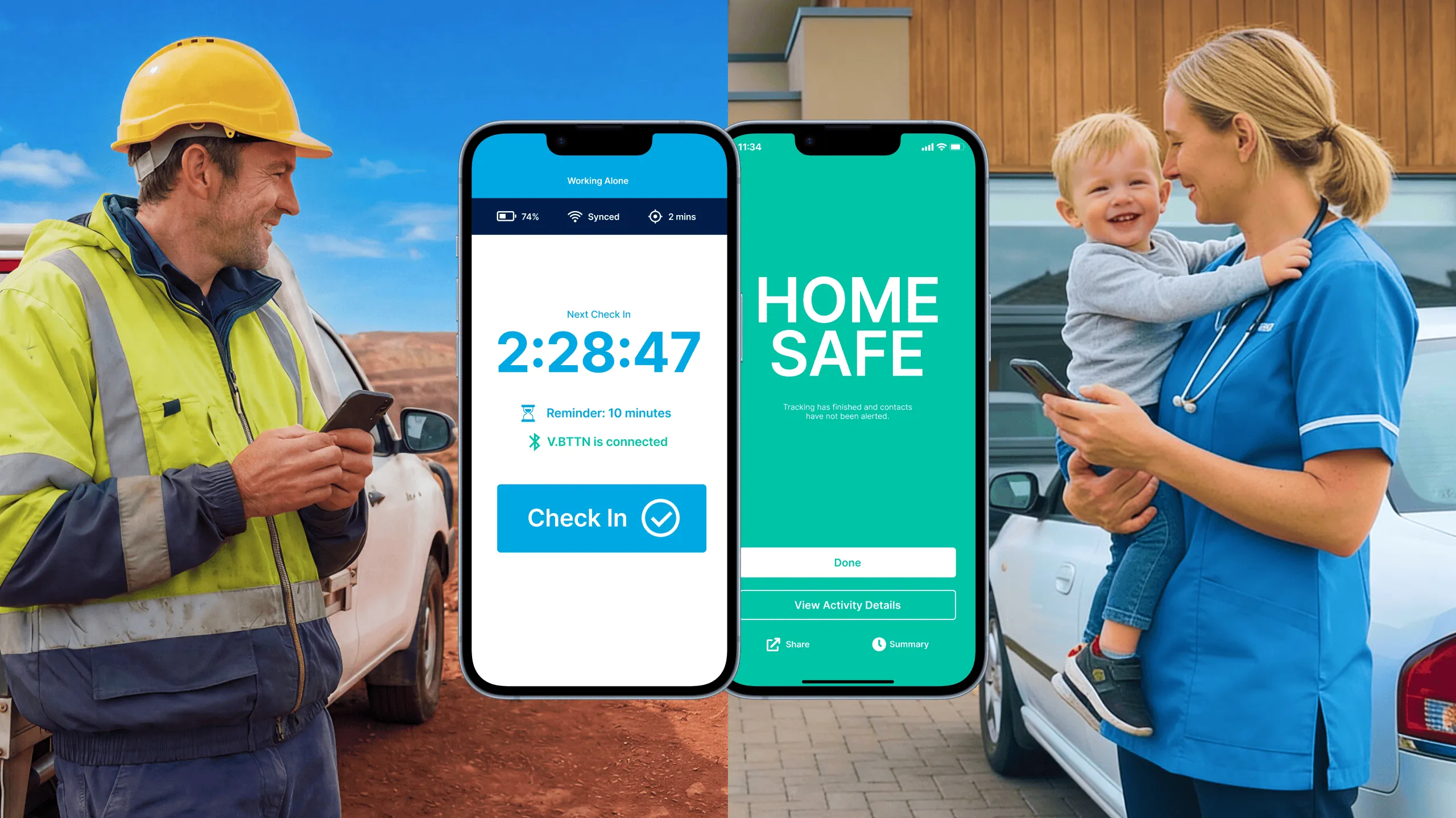
Why has no one built a safety app that lone workers want to use?

Prior to founding GetHomeSafe in 2012, Boyd worked for 10 years as both a Land Surveyor and Field Supervisor in New Zealand, Canada and Australia. Frustrated with top down, endless and irrelevant health and safety form filling he was inspired to build something quite different, something he actually wanted to use.
The independence paradox
Lone workers are some of the most trusted people in any organisation. They’re the ones who operate without direct supervision — out in the field, on the road, or in remote locations — problem solving, making critical decisions on their own, and in a lot of cases doing your organisation's best work.
They’re resourceful, confident, and outcome-driven. But do those same traits lend themselves to naturally engage with traditional top-down safety initiatives? Workers want to get the job done safely, efficiently, but on their own terms.
And that’s exactly where most lone worker safety solutions get it wrong and struggle with engagement.
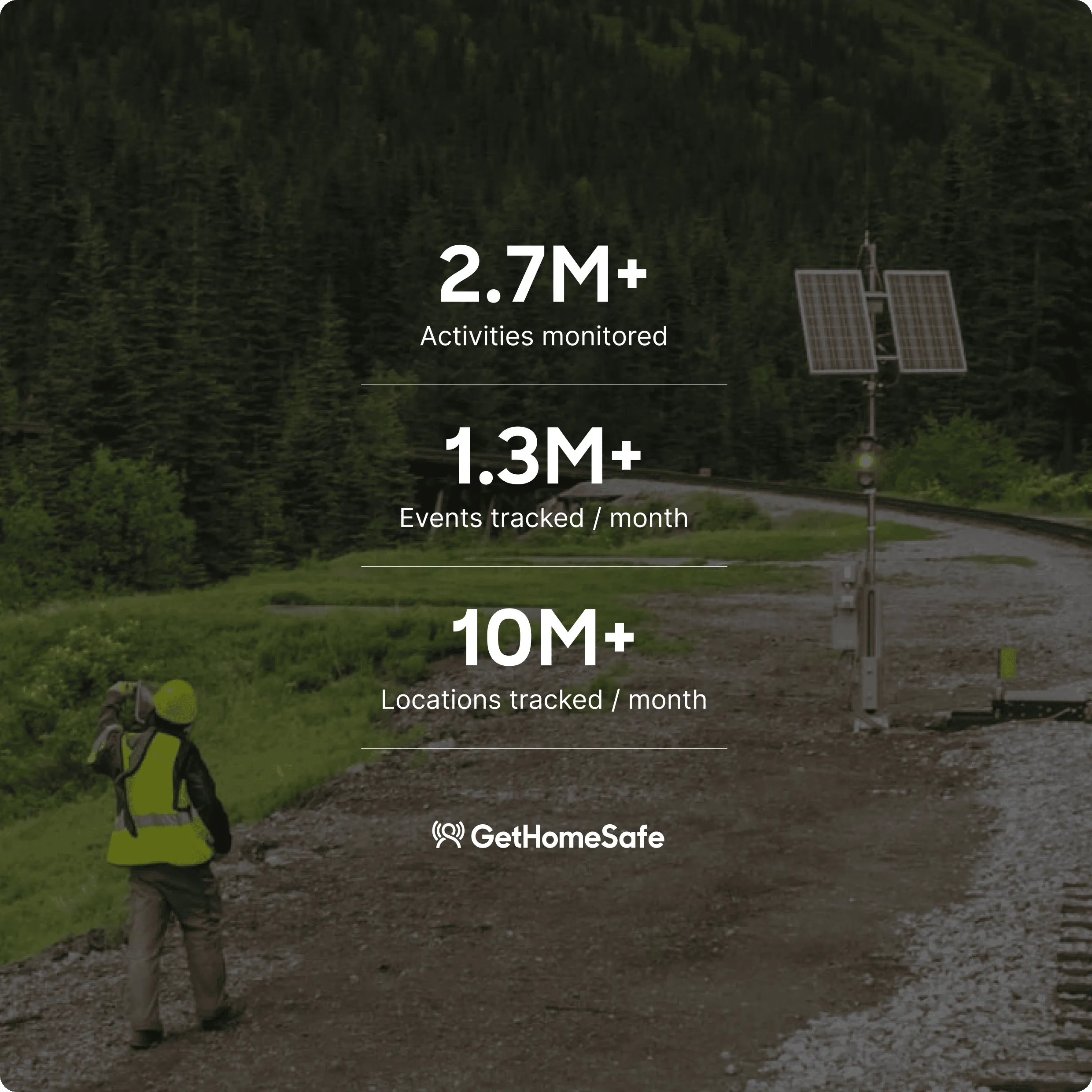
Engaging and empowering workers is something I've researched and considered with the team for years, as we've worked on the app to shape the experience for countless workers across millions of activities and locations.
Where traditional solutions fall short
For years, the lone worker technology market has focused on “lowest-touch” equals best engagement. The theory is simple: systems that require little or no input from the worker will generate the best engagement by creating the least disruption to workers getting their job done.
Traditional lone worker devices and apps are often designed to be:
- Always on — tracking workers continuously in the background, so the lone workers “don’t have to do anything.” Just turn it on, and off you go.
- Automatically triggered — packed with a lot of smart features and technology, so sending alerts will happen “without the worker needing to do anything” or with as little effort as possible.
- Policy driven — built for ensuring compliance.
On paper, that sounds efficient. In practice, it’s a failure of understanding. We hear it over and over again from exasperated health and safety managers, “why don’t they use it, it is keeping them safe!?”
The problem with “lowest touch”
When engagement becomes entirely passive, workers stop caring. They don’t feel part of the process — they feel subject to it.
Automation without human connection breeds complacency. Workers assume “the system will take care of me,” and supervisors assume “the system will alert me.” But both lose touch with what’s actually happening on the ground.
The result? A fragile safety net that’s technically active but practically disengaged.
It’s the reason why so many organisations are now asking the question:
“Why has no one built something lone workers actually want to use?”
How often do you deal with “one in a million” events?
Consider a company of 100 lone workers, doing 100 hours of solo work each month, meaning 10,000 lone worker hours a month. Let’s assume that the risk of something catastrophic happening is “one in a million”.
As a lone worker you might have a ~0.1% chance in any given year.
As a supervisor of 10 lone workers this chance increases to ~1.1% in any given year
As a HSE manager with 100 lone workers, you’re looking at ~11.2% chance of catastrophe in any given year: not great odds at all.
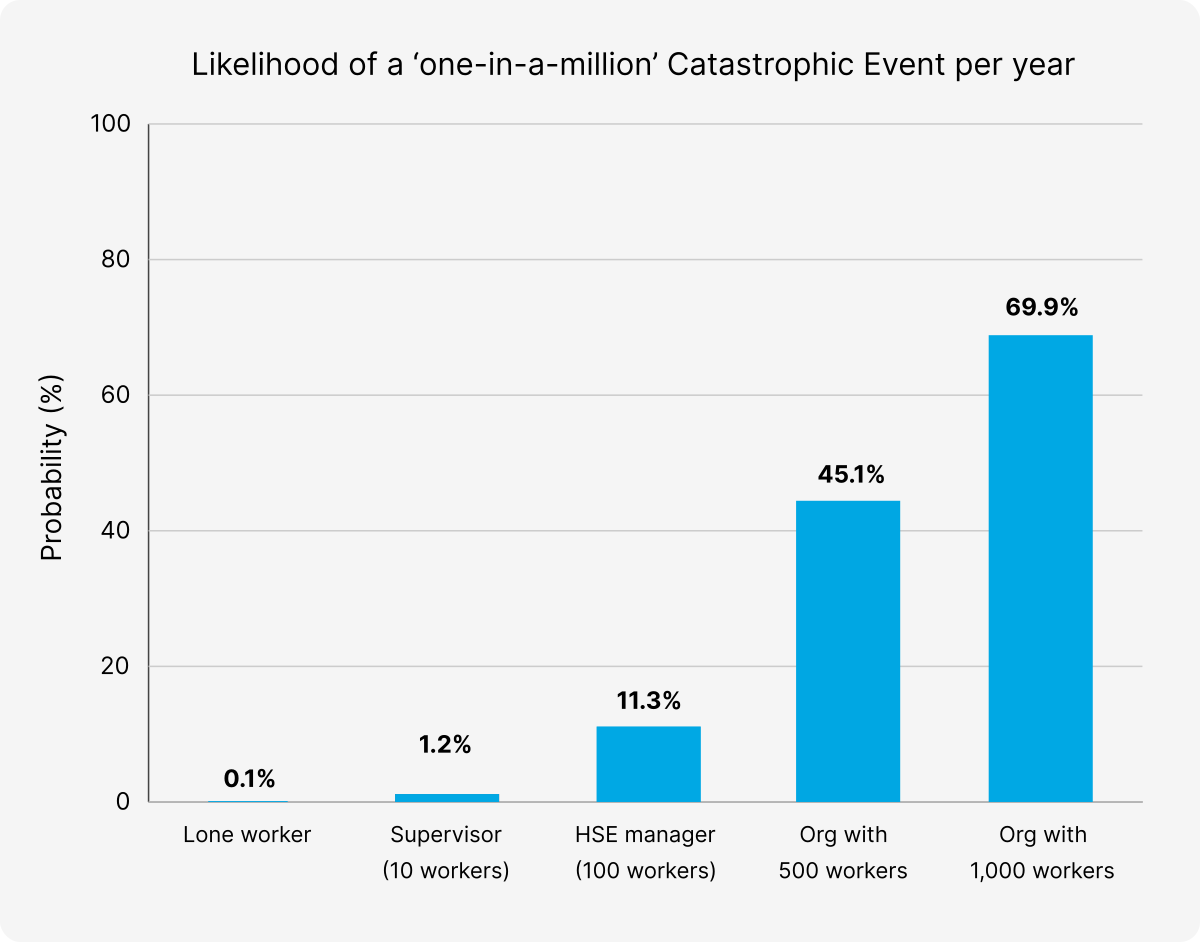
Your challenge is quite clear: while lone workers could easily claim it will never happen to them in their entire career, as a safety manager you will inevitably deal with a catastrophe.
There is nothing unsafe about “working alone”
The majority of lone workers are well trained, very familiar with their environments, confident and incredibly capable people. They are not at all reckless and unsafe — and generally speaking, very few of them actually feel unsafe on a day to day basis.
From your point of view, you are responsible for the safety of a significant number of people, and your initiatives need to cover everyone; it is not realistic to make individual safety experiences for each individual in our organisation. From the lone workers’ point of view — individualistic, but not selfish — it’s understandable some might balk at stopping work to fill out irrelevant forms and carrying around silly technology all day to prevent something that statistically speaking will never happen to them.
But at GetHomeSafe, we believe engagement isn’t the problem — it’s the solution.
Engagement through trust and reward, not control
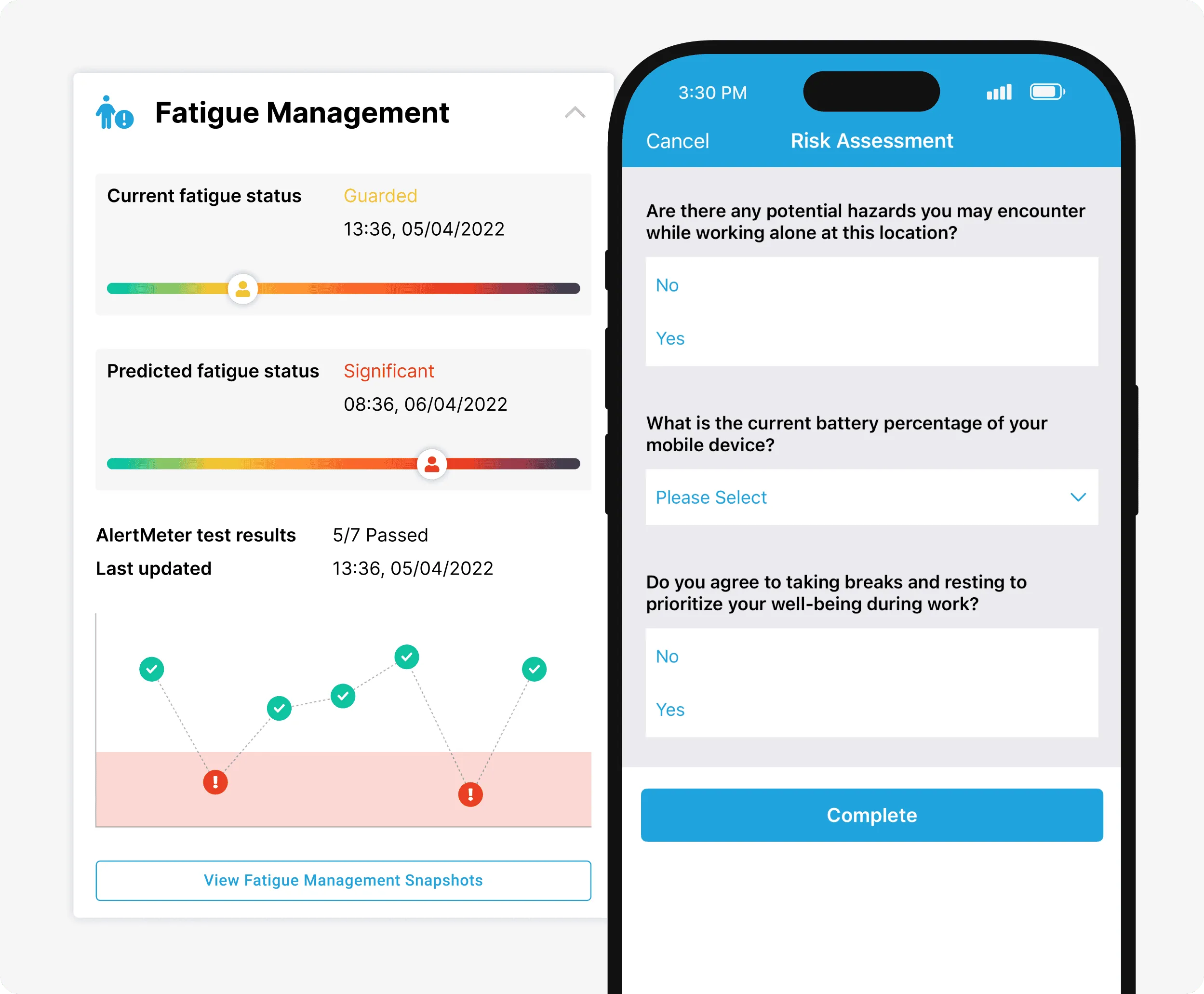
Instead of trying to eliminate user interaction, we’ve built a platform that makes engagement natural, relevant, and rewarding. We don’t force lone workers to “comply” — we make it easy for them to stay connected in relevant ways that actually help them do their job.
The GHS approach
- High trust
People trusted to work alone should also be trusted to manage their own safety. Our system reflects that philosophy — designed around autonomy, empowerment and relevance, not oversight and control. - Low friction
Quick, relevant check-ins that take seconds to complete. We’ve stripped away unnecessary prompts so every interaction feels purposeful, not performative. - Real value
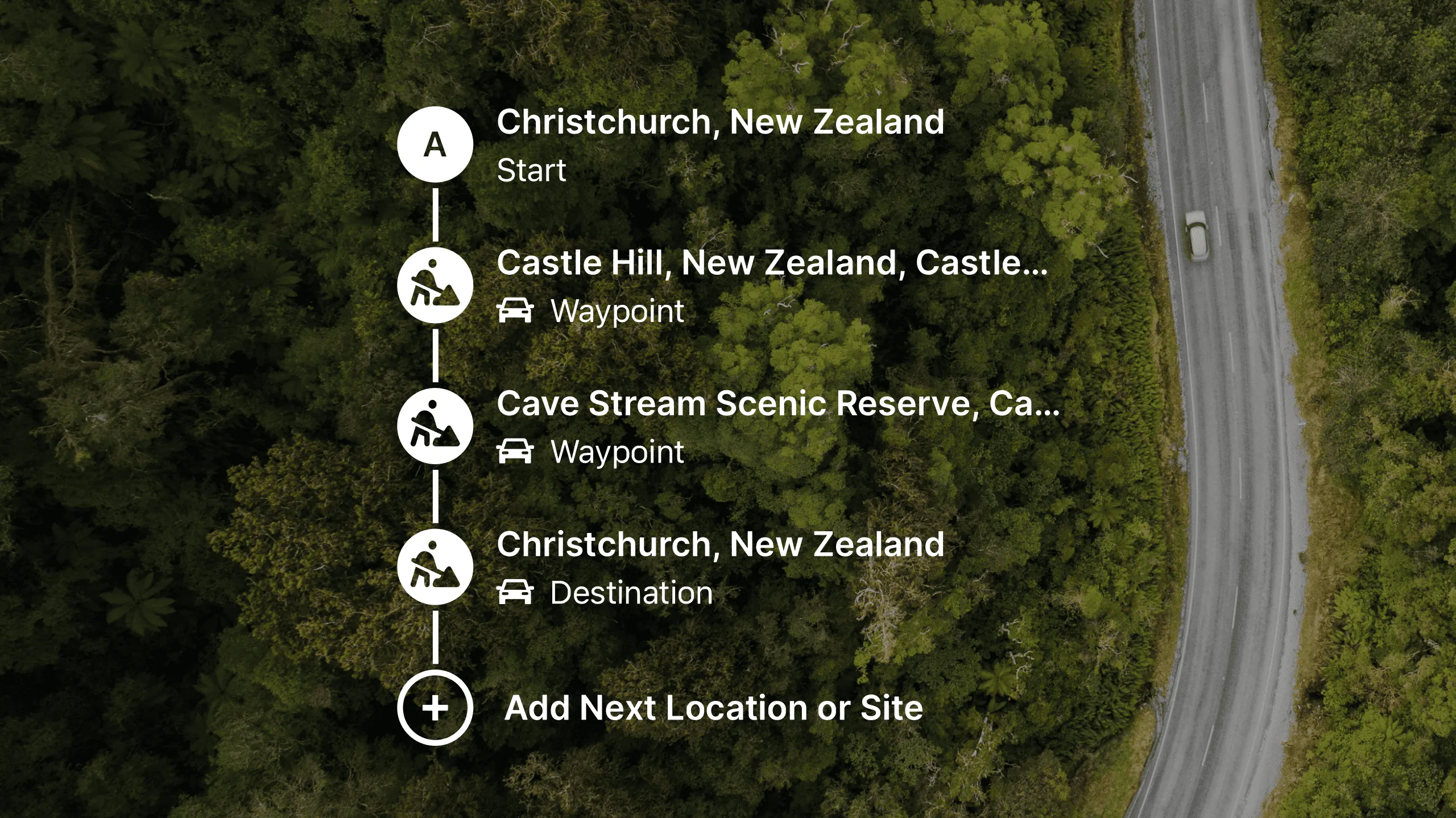
We add tools that make the app genuinely useful day to day — time and mileage reporting, note-taking, GPS logs, geolocated photos — turning GHS into a field productivity tool, not a compliance burden. - Proof of professionalism
Prove you have done the right thing as a lone worker and utilise reporting. By respecting lone workers’ independence, we create authentic engagement — the kind that lasts.
By respecting lone workers’ independence, we create authentic engagement — the kind that lasts.
Proof of professionalism: visibility without the ‘Big Brother’ effect
Our approach isn’t about surveillance — it’s about transparency by design.
Through smart automation and user-driven interactions, GetHomeSafe delivers what we call proof of professionalism: a high-trust environment where utilisation is rewarding, and disengagement is visible.
Because when a system is relevant, helpful, and integrated into your day, the most rewarding option is to stay honest and stay engaged. There’s nowhere to hide — and no reason to want to.
The market is catching up
More and more organisations are realising that low-touch, top-down lone worker systems don’t build safety culture — they erode it.
They’re turning to GetHomeSafe because we’ve built what the market missed: a lone worker solution people actually want to use.
- One that aligns safety engagement with human behaviour, not against it.
- One that respects independence while protecting wellbeing.
- And one that brings supervisors closer to their teams — without adding complexity or cost.
The future of lone worker compliance is engagement-first
At GetHomeSafe, we’re not just keeping people connected — we’re building trust between workers and organisations through engagement first, compliance second design principles.
Because we have focused on making safety feel like a highly relevant and rewarding part of the job, it’s simply a no-brainer to do it. High levels of engagement are easily obtained and with them come excellent compliance, without huge investments in changing your team’s safety culture.
Ready to build a safety culture workers actually buy into?
See how GetHomeSafe turns engagement into your biggest safety advantage. Book a quick demo and experience a system your team will actually want to use.